


Right here’s meals for concept: What a part of the mind controls feelings?
Granted, it’s no longer a query that comes up in on a regular basis conversations. And chances are high that, you’ve come throughout it on your highschool biology magnificence. So let’s mud off that reminiscence and get curious once more: what a part of the mind in truth controls feelings?
As a result of while you know the place your emotions come from, you prevent treating them like wild animals that want taming. As an alternative, you get started seeing them as messengers with directions for therapeutic, connection, and expansion.
What a part of the mind controls feelings?
Your mind has a complete community devoted to how you’re feeling. It’s referred to as the limbic gadget, and it’s the place intuition meets reminiscence, concept, and sensation. That is the a part of your mind that comes to a decision whether or not you snigger, cry, freeze, or achieve out for a hug.
Inside of it are 4 key avid gamers:
- The hypothalamus,
- Hippocampus,
- Amygdala, and
- Limbic cortex.
The hypothalamus units off the bodily cues, like a racing heartbeat, sweaty fingers, and that flutter on your abdomen. The hippocampus ties the ones sensations to reminiscence. The amygdala reacts rapid to risk or pleasure. The limbic cortex provides which means, serving to you pass judgement on, relate, and make a selection methods to reply.
All of this occurs in seconds. A concept, a odor, or a valid can awaken those specific mind areas, which interprets it into feeling ahead of you’ll be able to provide an explanation for it.
True, it may possibly appear overwhelming now and then. Ethan Kross, Ph.D., a psychologist who focuses on emotion law, issues out that “so incessantly in our lives we don’t revel in our feelings proportionally; we revel in them too intensely, or they remaining too lengthy.”
That’s the problem and the chance. As soon as the place feelings start, you’ll be able to get started operating together with your mind as an alternative of being swept away through it.
The place other feelings come from
In his e-book, Shift, Dr. Kross explains that feelings are “responses to stories you might have on this planet.” Each and every one begins someplace actual.
Right here’s how the 8 from the principle feelings listing hook up with the portions of your mind that force what you’re feeling, the way you act, and the way you adapt.
| Emotion | Number one mind area | Serve as |
| Pleasure | Prefrontal cortex and nucleus accumbens | Creates emotions of happiness, pride, and praise. |
| Believe | Prefrontal cortex and limbic cortex | Builds protection, bonding, and reference to others. |
| Worry | Amygdala | Detects risk and prepares your physique to stick secure. |
| Marvel | Amygdala and prefrontal cortex | Reacts to one thing surprising and refocuses your consideration. |
| Disappointment | Hippocampus and limbic cortex | Hyperlinks loss with reminiscence and is helping you procedure what came about. |
| Disgust | Insular cortex | Identifies ugly sensations and assists in keeping you clear of hurt. |
| Anger | Amygdala and hypothalamus | Raises power and readies you to give protection to limitations or take motion. |
| Anticipation | Prefrontal cortex and ventral tegmental space | Fuels interest, making plans, and motivation for what comes subsequent. |
Each and every revel in, together with what you’re having now, which is studying about this, is an revel in that your thoughts in truth filters into your mind, and your mind responds.
— Dr. Caroline Leaf, instructor of Calm Thoughts: A Clinical Way for Managing Anxiousness and Despair
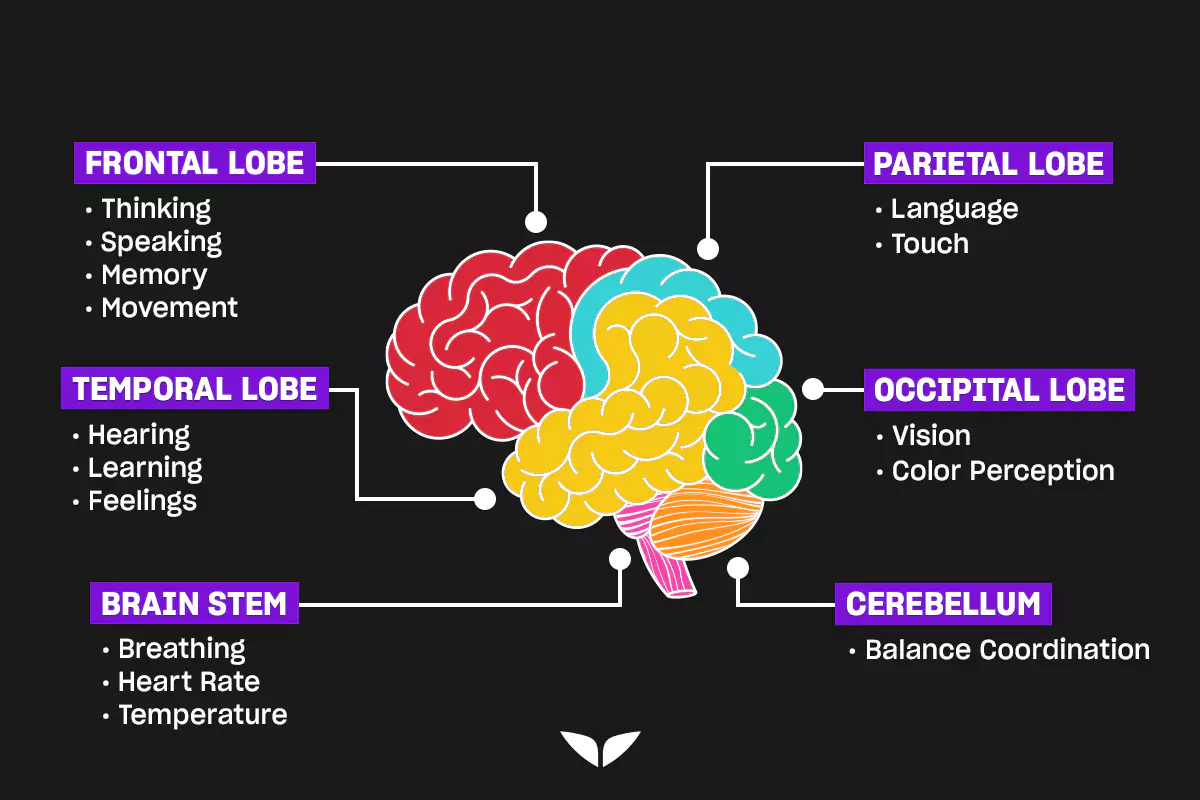
The anatomy of emotions: How feelings shape within the mind
Feelings start as a dialog between your thoughts, mind, and physique. The thoughts translates what is occurring round you, the mind responds with electric and chemical process, and the physique mirrors that reaction thru adjustments in middle fee, respiring, and muscle tone. In combination, they invent the revel in you realize as emotion.
“At the most simple stage, one thing on this planet stimulates our eyes, ears, pores and skin, tongue, or nostril, and that knowledge will get was electric impulses that trip thru our mind,” Dr. Kross says. “As soon as those impulses hit the sensory cortex, the mind makes which means out of the guidelines it has gained.”
Dr. Caroline Leaf, a neuroscientist and creator of the bestselling Cleansing Up Your Psychological Mess, stocks a similar view. In her Calm Thoughts: A Clinical Way for Managing Anxiousness and Despair program on Mindvalley, she explains, “Each and every revel in, together with what you’re having now, which is studying about this, is an revel in that your thoughts in truth filters into your mind, and your mind responds.”
The method unfolds in layers. The limbic gadget sparks the preliminary fee, the prefrontal cortex evaluates it, and the physique mirrors the sign thru hormones and nerves. In combination, they invent a full-body language that you just revel in as emotion.
How a valid turns into emotion
Now, believe when any individual all at once calls your title—“Larry.” Right here’s what occurs subsequent:
- The sound enters thru your ears.
- It travels to the auditory cortex, which identifies if the voice is acquainted or no longer.
- Inside moments, the amygdala tests the tone for protection. Did you listen “Larry!” or “Larry?” or “Larry”?
- The hippocampus then pulls up recollections related to that individual.
- The hypothalamus adjusts your heartbeat and respiring. If it’s a liked one, heat spreads thru your chest as oxytocin and dopamine liberate. If it’s no longer, your physique remains alert as an alternative, your muscular tissues nerve-racking, and your senses are on top watch till your mind comes to a decision what to do subsequent.
What began as sound waves turns into a reaction from the physique, and each reaction feeds new knowledge again to the mind. Via this rhythm, consciousness turns into the bridge between response and selection.
And in studying to keep an eye on your feelings, the considering portions of your mind must paintings in sync with the sensation portions. It’s a ability, in reality, the place it’s important to understand what you’re feeling with out letting it run the display.
With follow, this consciousness will lend a hand rewire your mind towards calm, stability, and readability.
The limbic gadget: Your mind’s emotional heart
In line with Dr. Leaf, what many of us don’t notice is that the mind and the thoughts are utterly various things. “The mind,” she explains, “is a bodily organ that responds to the thoughts.” It’s a responder, a reactor.
That’s why the mind has a limbic gadget. It sits within the medial temporal lobe, which is positioned underneath the cerebral cortex and above the brainstems. And, as discussed, 4 buildings sit down on the core of the program:
- The hypothalamus, which hyperlinks mind alerts to physique chemistry. It adjusts hormones and autonomic process so a sense turns into a bodily state.
- The amygdala, which evaluates emotional depth. It tags attractions and sounds with significance and indicators different areas when pace issues.
- The hippocampus, which gives context and timeline. It is helping the mind retailer what came about and the place it came about, so long term cues make sense.
- The limbic cortex, which provides consciousness and interpretation. It comprises the cingulate and parahippocampal gyri, and it is helping you relate emotion to which means.
Those portions lend a hand your mind come to a decision what issues maximum. It provides which means to what you notice, listen, and suppose, then sends alerts to different portions of the mind that plan the way you react.
So while you’re asking, “What a part of the mind controls emotion?”, what you in reality need to ask is, “What a part of the mind controls feelings and emotions?”
That will be the limbic gadget. As it is helping you from the interior out.
The hypothalamus: Hormones and reactions
The hypothalamus is a small but robust construction that sits deep within the mind, simply above the brainstem. It acts because the command heart between your ideas and your physique, translating emotion into bodily response.
When you’re feeling apprehensive ahead of a presentation or calm after a hug, it’s the hypothalamus at paintings. It’s additionally the a part of the mind that controls respiring, heartbeat, physique temperature, and digestion thru autonomic apprehensive gadget law and the discharge of hormones.
Moreover, when the mind senses a risk, it alerts the pituitary gland to liberate hormones that turn on the adrenal glands. Those glands then produce cortisol and adrenaline, making ready your physique for fast motion.
Different hormones lift other emotional notes: oxytocin promotes bonding and accept as true with, dopamine helps motivation and enjoyment, and serotonin stabilizes temper.
And thru those chemical messengers, the hypothalamus turns emotional states into bodily stories and is helping repair stability as soon as the instant has handed.
The amygdala: Worry, anger, and survival
For those who marvel, “What a part of the mind controls feelings like anger?”, that will be the amygdala. It sits deep inside the temporal lobes, one on every facet, and scans the whole thing you notice and listen to for indicators of protection or risk. And consistent with Jenna Nielsen, LCSW, it performs crucial position in processing feelings and recollections.
“While you revel in an intense emotion, the amygdala is activated and acts as an alarm for attainable threats,” she says. It sends speedy alerts to the hypothalamus, which triggers the physique’s battle‑or‑flight reaction. Your middle beats sooner, muscular tissues tighten, and a spotlight narrows, all inside fractions of a 2d.
As a result of this, it additionally tags stories with depth in order that occasions tied to concern, anger, or pleasure keep bright. For example, smelling your ex’s fragrance or cologne can all at once pull you again to the breakup love it came about the day before today.
Over the years, those emotional imprints train the mind what to steer clear of and what to pursue.
The hippocampus: Reminiscence meets emotion
Now, whilst the amygdala is the organ that controls feelings, the hippocampus, as Jenna explains it, is “accountable for storing the end result of the processing of the emotion that happens within the amygdala to create this reminiscence.”
What that merely way is, it provides construction to revel in through recording the place and when occasions occur and linking them to emotions. With out it, moments would blur in combination with out context or which means.
The hippocampus additionally is helping the mind separate actual threats from remembered concern. It compares what is occurring now with what has came about ahead of, permitting you to acknowledge that as of late’s thunderstorm isn’t the person who apprehensive you as a kid.
This area sits beside the amygdala within the temporal lobe and works intently with it. When the amygdala marks an match as vital, the hippocampus recordsdata it into long-term reminiscence. And in combination, they come to a decision which stories keep bright and which fade into the background.
The limbic cortex: Steadiness and emotional judgment
The limbic cortex brings consciousness to what you’re feeling. It is helping your mind perceive emotion in context and use that knowledge to lead your conduct.
This area comprises the 2:
- Cingulate gyrus, which is helping you keep conscious about your feelings with out being dominated through them. It helps empathy, center of attention, and the power to stay viewpoint when eventualities really feel intense.
- Parahippocampal gyrus, which fits intently with the hippocampus to glue feelings with recollections. This is helping you be mindful no longer simply what came about, however the way it felt and what you discovered from it.
In combination, the limbic cortex lets in your mind to carry stability to emotion and judgment. For example, when any individual cuts you off in visitors, you’re taking a deep breath as an alternative of reacting.
This a part of the mind will give you area to pause and replicate. And while you’re in a position to do this, you’ll be able to reply in ways in which toughen readability, connection, and expansion.
What a part of the mind controls temper and behaviour?
Temper and behaviour come from the stable dialog between the considering phase and the emotional a part of the mind. So the simpler query to invite here’s, “What a part of the mind controls feelings and persona?” And that’s the limbic gadget together with the prefrontal cortex.
Now, the latter, consistent with Jenna, “assists folks through the use of reason why, making plans, and willpower when responding to emotional responses.” It is helping you are making selections in keeping with common sense and feeling and evaluates conceivable results, each certain and unfavourable, ahead of taking motion.
When the limbic gadget alerts a robust emotion, the prefrontal cortex evaluates it and comes to a decision whether or not to talk, keep silent, transfer ahead, or pause.
On the other hand, while you reside underneath continual tension or face trauma, Jenna explains a couple of issues can occur:
- The amygdala turns into hyperactive and enlarged.
- The hippocampus is broken because of extended tension hormones, developing reminiscence problems and lengthening intrusive recollections.
- The prefrontal cortex is weakened, decreasing its skill to paintings.
Mindfulness practices, she advises, can lend a hand enhance this hyperlink. They permit your thoughts to stick calm whilst the mind processes emotion with readability.
Our feelings aren’t to be feared. As an alternative, they’re calling for our love, compassion, empathy, and acceptance.
— Jennifer Patridge, instructor of Mindvalley’s Tapping into Emotional Mastery program
The prefrontal cortex: Determination meets emotion
The prefrontal cortex sits proper at the back of your brow, and it is helping you are making selections on a daily basis. It gathers knowledge from the remainder of your mind, then turns that knowledge into movements that fit your objectives.
As an example, you’re in an issue and frustration rises. At that second, the prefrontal cortex is helping you pause, take a breath, and make a selection your phrases sparsely as an alternative of reacting on impulse.
This a part of your mind additionally is helping you suppose forward. It weighs the hazards and advantages of every selection and predicts what would possibly occur subsequent. As a result of that, you’ll be able to plan conversations, keep calm underneath power, and regulate your means when issues trade.
As well as, the prefrontal cortex performs a key position in the way you hook up with others. It is helping you understand social cues, know the way folks really feel, and reply in ways in which construct accept as true with and admire.
When tension or damage weakens this space, feelings can take over extra simply, and judgment can change into clouded. A wholesome prefrontal cortex, then again, strengthens empathy, center of attention, and emotional stability.
This a part of the mind continues to develop and broaden till your mid-twenties, which is why impulsive alternatives are extra not unusual all over early life. As you develop, the prefrontal cortex strengthens your skill to stick calm and make considerate alternatives.
What science says about feelings within the mind & what that implies to you
Each and every emotion has its personal footprint within the mind. Scientists can now map how emotions seem throughout other areas, revealing that no unmarried space “controls” emotion. As an alternative, it’s a community that works in combination.
Right here’s what it may possibly appear to be in keeping with the principle feelings:
- Pleasure lighting fixtures up the prefrontal cortex and praise facilities, liberating dopamine and serotonin that make you’re feeling uplifted.
- Believe engages the prefrontal and limbic cortex, the place oxytocin builds connection and protection.
- Worry turns on the amygdala and brainstem, priming your physique for fast motion.
- Marvel triggers the amygdala and prefrontal cortex, sprucing center of attention at the surprising.
- Disappointment attracts at the hippocampus and limbic cortex, linking emotion with reminiscence for therapeutic.
- Disgust stems from the insular cortex, protective you from hurt thru sensory consciousness.
- Anger fires up the amygdala and hypothalamus, elevating power to protect or act.
- Anticipation turns on the prefrontal cortex and ventral tegmental space, fueling motivation and interest.
Neuroscience presentations that those patterns aren’t fastened. The mind’s skill to rewire itself (referred to as neuroplasticity) way you’ll be able to reshape emotional behavior at any age. As Jenna explains, “We will be able to keep an eye on our feelings through coaching our mind to be extra proof against activating the amygdala and sympathetic apprehensive gadget when no risk is provide.”
Jennifer Partridge, an emotional therapeutic skilled and Mindvalley instructor, stocks a an identical perception in her Mindvalley program, Tapping into Emotional Mastery. She explains, “Our feelings aren’t to be feared. As an alternative, they’re calling for our love, compassion, empathy, and acceptance.”
You’ll be able to start to try this thru EFT tapping, deep respiring, and different practices to loosen up your thoughts. They lend a hand calm the physique’s tension reaction, turn on the parasympathetic apprehensive gadget, and create a way of protection from inside.
Futureproof your well-being
“Feelings are what make us superbly human,” says Jennifer Partridge. But maximum people have been by no means taught methods to concentrate to them, let by myself paintings with them.
In her Tapping into Emotional Mastery program, Jennifer presentations you methods to use tapping to liberate tension, calm the thoughts, and rewire the emotional patterns that stay you caught. You’ll discover ways to:
- Quiet your inside chaos in mins
- Really feel secure and level-headed on your physique
- Flip feelings into steerage as an alternative of resistance
- Become independent from from ordinary tension loops
- Construct lasting emotional resilience and peace
You’ll be able to get started with one unfastened magnificence from Jennifer’s Mindvalley program and really feel the shift for your self.
Sumit Atwal, a author from Amsterdam, joined Tapping into Emotional Mastery to liberate outdated trauma and full of life blocks that stored her feeling caught. Over 28 days, she started to really feel lighter, more potent, and extra at house in her physique. She stocks:
After this quest, I will be able to with a bit of luck say that I’m much more conscious and in keep an eye on of my inside state, which makes me really feel empowered.
That second of consciousness is the place transformation takes root. While you do, you’ll really feel what actual emotional freedom is manufactured from.
Welcome in.

